

What if some of the services you already pay for through your taxes could actually save you money?
Millions of Americans overlook government programs that can help with everyday life, education, career training, business, taxes, housing, and even forgotten money.
The problem is not always that these programs are difficult to find. Many people simply do not know they exist.
Some sound too good to be true. Others involve paperwork. And a few are hidden behind government websites that are not exactly famous for being easy to navigate.
But if you know where to look, you may find valuable services that cost nothing.
Here are eight free government programs and resources that many Americans never take advantage of.
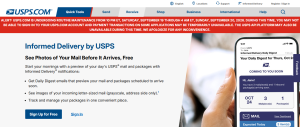 Imagine knowing what mail is coming to your house before you even get home.
That is basically what USPS Informed Delivery offers.
The United States Postal Service processes huge amounts of mail every day. During the sorting process, automated machines capture digital images of the outside of many letter sized envelopes.
USPS Informed Delivery allows you to see those images through your email or online account.
After you sign up and verify your identity and address, you can receive a daily preview of eligible mail that is expected to arrive in your mailbox.
That means you might see that a bill, letter, invitation, or other piece of mail is on its way before you physically check your mailbox.
You can also use the service to track certain incoming packages.
 Taking the family to a national park can be an amazing experience.
It can also get expensive.
An entrance pass to a major national park can cost around $35 for a vehicle, while an annual America the Beautiful pass costs $80.
But families with a fourth grader may have another option.
The Every Kid Outdoors program provides eligible fourth grade students with an annual pass that can be used at participating federal recreation sites.
And the benefit is not limited to the fourth grader.
The pass can cover the student and accompanying family members under the program's rules.
That means one fourth grader could help an entire family save money on entrance fees during a national park trip.
 This one sounds like a scam.
You search your name, discover that a government database may have money connected to you, and then you are asked to prove your identity to claim it.
It sounds suspicious.
But unclaimed property is a real thing.
When companies owe people money but cannot locate them, those funds can eventually be transferred to a state government under a legal process commonly known as escheatment.
This can happen with things such as:
8. USPS Informed Delivery
Imagine knowing what mail is coming to your house before you even get home.
That is basically what USPS Informed Delivery offers.
The United States Postal Service processes huge amounts of mail every day. During the sorting process, automated machines capture digital images of the outside of many letter sized envelopes.
USPS Informed Delivery allows you to see those images through your email or online account.
After you sign up and verify your identity and address, you can receive a daily preview of eligible mail that is expected to arrive in your mailbox.
That means you might see that a bill, letter, invitation, or other piece of mail is on its way before you physically check your mailbox.
You can also use the service to track certain incoming packages.
What Informed Delivery does not do
There is an important difference between seeing your mail and reading your mail. The service does not show you the contents of your letters. The images are generally of the outside of eligible mail pieces. Magazines, large catalogs, unusual mail pieces, and some other items may not appear. Mail can also be delayed. So if an item appears in your morning preview but does not arrive that afternoon, it does not necessarily mean something is wrong. Still, it is a useful service. The Postal Service was already creating these images as part of its sorting process. Informed Delivery simply gives you access to eligible images through a digital system. And it costs you nothing.7. The Every Kid Outdoors Program
Taking the family to a national park can be an amazing experience.
It can also get expensive.
An entrance pass to a major national park can cost around $35 for a vehicle, while an annual America the Beautiful pass costs $80.
But families with a fourth grader may have another option.
The Every Kid Outdoors program provides eligible fourth grade students with an annual pass that can be used at participating federal recreation sites.
And the benefit is not limited to the fourth grader.
The pass can cover the student and accompanying family members under the program's rules.
That means one fourth grader could help an entire family save money on entrance fees during a national park trip.
Who qualifies?
The program is designed for fourth grade students and eligible homeschool equivalents. The pass is tied to the student's fourth grade year and has specific validity dates. There is also an application process. The student completes an educational activity and receives a paper voucher that can be used to obtain the pass.What does it cover?
The pass is primarily for entrance or standard amenity fees at participating federal recreation sites. It does not automatically cover everything you might spend money on during a trip. Camping, boat rentals, special activities, food, and other services can still cost extra. Still, for a family planning several outdoor trips, this can be a valuable benefit. And the best part is simple. You may already have access to it because you have a fourth grader in the family.6. Check for Unclaimed Money
This one sounds like a scam.
You search your name, discover that a government database may have money connected to you, and then you are asked to prove your identity to claim it.
It sounds suspicious.
But unclaimed property is a real thing.
When companies owe people money but cannot locate them, those funds can eventually be transferred to a state government under a legal process commonly known as escheatment.
This can happen with things such as:
- Forgotten bank accounts
- Uncashed checks
- Old utility deposits
- Insurance payments
- Forgotten wages
- Other financial property
Do not expect instant cash
Finding your name in a database does not mean you will receive money immediately. You generally have to submit a claim and prove that you are the rightful owner. Depending on the claim, you may need identification, proof of a previous address, or other documentation. Some claims can take weeks or longer to process. And you may find that the amount is small. Maybe it is $40 from an old utility deposit. Maybe it is significantly more. Either way, searching costs nothing. A few minutes of your time could uncover money you did not realize you were owed.5. Free HUD Housing Counseling
Financial problems create opportunities for people who want to take advantage of someone else's stress. If you are dealing with foreclosure, credit problems, debt, or the challenge of buying a home, you will find plenty of companies promising quick solutions. Some may charge large upfront fees for services that sound impressive. Before paying a private company, look at the free housing counseling resources supported by the U.S. Department of Housing and Urban Development. HUD approved housing counseling agencies can provide guidance to renters, home buyers, and homeowners. For example, a housing counselor may help you:- Review your financial situation
- Understand your mortgage options
- Create a budget
- Prepare to buy a home
- Understand foreclosure options
- Communicate with your mortgage servicer
- Explore available loss mitigation options
Be careful with companies promising miracles
A legitimate counselor cannot magically erase legitimate debt. They cannot guarantee that a lender will approve your mortgage. And they cannot promise that every foreclosure problem will disappear. What they can do is help you understand your situation and identify realistic options. Because scams exist in the housing and credit industries, it is important to verify that you are dealing with an approved counseling agency through official government resources. Free professional guidance is often worth investigating before spending thousands of dollars on a company promising an easy fix.4. IRS Direct File
Taxes are complicated enough without paying someone just to enter information into a form. For many taxpayers, the government already receives much of the information needed to understand their income. That has created an obvious question: Why not let people file directly with the IRS? That is the idea behind IRS Direct File. Direct File is a government operated online tax filing system designed to allow eligible taxpayers to file federal income tax returns directly with the IRS. The program was first piloted in 2024 and has expanded to additional states and taxpayers. The major attraction is the price. It is free. There is no need to pay a private tax software company simply to access basic filing features if you qualify to use Direct File.But there is an important limitation
Direct File is not designed for every tax situation. People with straightforward tax situations may find it useful. However, taxpayers with more complicated circumstances may need other tax preparation options. For example, situations involving business income, complex deductions, certain investment activity, or other complicated tax issues may fall outside what the system can handle. Direct File also focuses on federal taxes, with state filing handled separately where applicable. So this is not necessarily a replacement for an experienced tax professional. But if your tax situation is simple, it is worth checking whether you qualify before paying for tax preparation.3. Ask a Librarian at the Library of Congress
Most people think of the Library of Congress as a beautiful building in Washington, D.C. filled with historical documents. It is much more than that. The Library of Congress is an active research institution with enormous collections of books, photographs, newspapers, manuscripts, recordings, and other materials. It also offers a service called Ask a Librarian. Through the service, members of the public can submit research questions and receive assistance from library staff. This can be particularly useful if you are trying to find something difficult to locate online. Maybe you are researching family history. Maybe you need an old newspaper article. Perhaps you are looking for a historical document, a primary source, a photograph, or information buried inside a specialized collection. Instead of spending hours searching random websites, you can ask people who work with these collections.There is a right way to use the service
This is not a free personal research assistant who will complete an entire project for you. A broad question such as "Tell me about American history" is unlikely to produce a highly customized research project. A specific question is much more useful. For example, if you are trying to locate a particular historical record or understand where a certain primary source can be found, provide as much detail as possible. The more specific your question, the easier it is for a research professional to point you in the right direction. You may not get an immediate response. Research takes time. But when you need information that is difficult to find, having access to professionals who understand the collection can be extremely useful.2. SCORE: Free Business Mentoring
Starting a business can get expensive quickly. There are websites selling courses. There are business coaches selling expensive packages. There are consultants charging thousands of dollars for advice that a new entrepreneur may not even know how to evaluate. But there is another option. SCORE is a nonprofit resource partner of the U.S. Small Business Administration that connects entrepreneurs with volunteer business mentors. Its mentors include experienced business owners, executives, and professionals. You can request mentoring and receive guidance on issues such as:- Business planning
- Marketing
- Financing
- Operations
- Financial projections
- Hiring
- Business strategy