

The internet is full of useful websites.
The problem?
Most people use the same handful of sites every day.
You search Google. You watch YouTube. You check social media. Maybe you stream something on Netflix.
But there is a huge part of the internet most people never discover.
Some websites can help you find where to stream a movie. Others let you listen to live radio from almost anywhere in the world. Some help you understand complicated terms of service, find free academic research, preserve webpages, or even track aircraft in real time.
The best part is that many of these websites are free to use.
So, if you are looking for useful websites you probably don't know about, here are eight worth checking out.
 Have you ever spent 20 minutes looking for a movie instead of actually watching one?
You're not alone.
Streaming has made entertainment easier in some ways and more complicated in others. Instead of having everything in one place, movies and TV shows are spread across dozens of services.
A movie might be on Netflix.
Another might be on Hulu.
A third might be available on Max.
Then you find the movie you want on Amazon Prime, only to discover that it costs extra to rent.
This is exactly the problem JustWatch helps solve.
JustWatch works like a search engine for streaming services.
Enter the name of a movie or TV show, and it tells you where you can watch it.
You can see whether it is included with a streaming subscription you already have, available for free on an ad supported service, or available to rent or buy.
You can also filter the results based on the services you use and other viewing options.
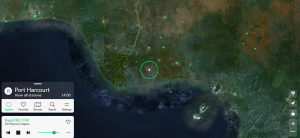 Want to hear what is happening on the radio in another part of the world right now?
Try Radio Garden.
When you open the website, you see a globe covered with thousands of points.
Those points represent radio stations.
You can rotate the globe, zoom into different countries, and listen to live radio from those locations.
You could start in the United States, move across the Atlantic, and suddenly find yourself listening to a station in Europe.
Move again and you might hear music or a talk show from South America.
It is a simple idea, but it is surprisingly addictive.
 Let's be honest.
How often do you actually read a website's terms of service?
Probably almost never.
And that is understandable.
Some agreements are extremely long and packed with complicated legal language. Most people simply scroll to the bottom and click "I agree."
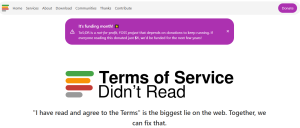
Terms of Service Didn't Read, often known as ToS;DR, was created to make those agreements easier to understand.
The service summarizes important parts of terms and privacy policies using simpler language.
It can highlight things such as data collection, privacy practices, tracking, account policies, and other conditions that users may want to know about.
Instead of spending a long time trying to understand a legal document, you can get a much quicker overview of what you are agreeing to.
 Your email address has become a form of currency on the internet.
Want a discount?
Enter your email.
Want to download a report?
Enter your email.
Want to access an article?
Enter your email.
The problem is that once you give a website your personal address, you may start receiving emails you never asked for.
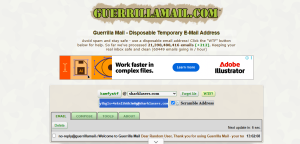
That is where Guerrilla Mail can be useful.
The service provides temporary email addresses that can be used for short term situations.
You can use the temporary inbox to receive a confirmation message or verification email without giving a website your primary email address.
 The internet changes constantly.
A webpage that exists today may be edited or removed tomorrow.
A company might update an announcement.
A news website might change an article.
A page you bookmarked could disappear completely.
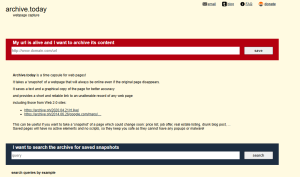
Archive.today helps solve this problem by allowing users to save snapshots of webpages.
You provide a webpage address, and the service creates an archived version that can be accessed later.
1. JustWatch: Find Where to Watch Any Movie
Have you ever spent 20 minutes looking for a movie instead of actually watching one?
You're not alone.
Streaming has made entertainment easier in some ways and more complicated in others. Instead of having everything in one place, movies and TV shows are spread across dozens of services.
A movie might be on Netflix.
Another might be on Hulu.
A third might be available on Max.
Then you find the movie you want on Amazon Prime, only to discover that it costs extra to rent.
This is exactly the problem JustWatch helps solve.
JustWatch works like a search engine for streaming services.
Enter the name of a movie or TV show, and it tells you where you can watch it.
You can see whether it is included with a streaming subscription you already have, available for free on an ad supported service, or available to rent or buy.
You can also filter the results based on the services you use and other viewing options.
Why JustWatch is useful
Instead of opening five different streaming apps, you can search once and get an answer. That saves time and helps you avoid paying for a rental when the same movie may already be available through a service you subscribe to. If you watch a lot of movies and TV shows, this is one of those simple tools that can quickly become part of your routine.2. Radio Garden: Listen to Live Radio Around the World
Want to hear what is happening on the radio in another part of the world right now?
Try Radio Garden.
When you open the website, you see a globe covered with thousands of points.
Those points represent radio stations.
You can rotate the globe, zoom into different countries, and listen to live radio from those locations.
You could start in the United States, move across the Atlantic, and suddenly find yourself listening to a station in Europe.
Move again and you might hear music or a talk show from South America.
It is a simple idea, but it is surprisingly addictive.
Why Radio Garden is worth trying
Most websites use algorithms to decide what you should see or hear. Radio Garden gives you something different. You choose the location. You choose the station. And you hear what is being broadcast there. It is also a fun way to discover music, languages, news, and local culture from places you may never visit. Think of it as a giant radio dial covering the entire planet.3. Terms of Service Didn't Read: Understand What You Agree To
Let's be honest.
How often do you actually read a website's terms of service?
Probably almost never.
And that is understandable.
Some agreements are extremely long and packed with complicated legal language. Most people simply scroll to the bottom and click "I agree."
Terms of Service Didn't Read, often known as ToS;DR, was created to make those agreements easier to understand.
The service summarizes important parts of terms and privacy policies using simpler language.
It can highlight things such as data collection, privacy practices, tracking, account policies, and other conditions that users may want to know about.
Instead of spending a long time trying to understand a legal document, you can get a much quicker overview of what you are agreeing to.
Why ToS;DR matters
We click "Accept" constantly. But accepting something does not mean we understand it. Tools like this can help you become more aware of what online services are asking you to agree to. It does not replace the original legal document, but it can make the important points easier to spot.4. Guerrilla Mail: Get a Temporary Email Address
Your email address has become a form of currency on the internet.
Want a discount?
Enter your email.
Want to download a report?
Enter your email.
Want to access an article?
Enter your email.
The problem is that once you give a website your personal address, you may start receiving emails you never asked for.
That is where Guerrilla Mail can be useful.
The service provides temporary email addresses that can be used for short term situations.
You can use the temporary inbox to receive a confirmation message or verification email without giving a website your primary email address.
When should you use a temporary email?
It can be useful for things such as:- Testing an unfamiliar website
- Receiving a one time confirmation email
- Downloading something that requires an email
- Avoiding unnecessary marketing messages in your main inbox
5. Archive.today: Save a Copy of a Webpage
The internet changes constantly.
A webpage that exists today may be edited or removed tomorrow.
A company might update an announcement.
A news website might change an article.
A page you bookmarked could disappear completely.
Archive.today helps solve this problem by allowing users to save snapshots of webpages.
You provide a webpage address, and the service creates an archived version that can be accessed later.
Why would you want to archive a webpage?
There are plenty of reasons. Maybe you are researching a topic and want to preserve a source. Maybe you want to record what a company said at a particular point in time. Maybe you simply want to save information before a page changes. For journalists, researchers, students, and anyone who works with online information, webpage archives can be extremely useful. The internet is constantly changing. An archive gives you a way to preserve a moment in that change.6. Unpaywall: Find Free Legal Copies of Research Papers
Academic research can be expensive to access. You find a paper that contains exactly the information you need. You click the link. Then you hit a paywall. Sometimes you are asked to pay a surprisingly large amount just to read one paper. But there is another possibility. The paper may already have a free, legal version somewhere else online. That is where Unpaywall comes in. Unpaywall searches for legally available open access versions of academic papers. These copies can sometimes be stored in university repositories, institutional archives, or other legitimate sources.Why Unpaywall is useful
Students and researchers often waste time trying to find free versions of papers. Unpaywall makes the process easier. If you find a research paper behind a paywall, it can help you check whether a legal open access version exists elsewhere. You are not bypassing the publisher's security. You are simply finding a version that is already legally available. For anyone who regularly reads academic research, that can save a lot of time.7. Google My Activity: See What Google Has Saved
You probably know that Google records certain activity associated with its services. But have you ever actually looked at it? Google My Activity lets you review activity connected to your Google account. Depending on your settings and the services you use, this can include things such as:- Google searches
- YouTube activity
- App activity
- Other interactions with Google services
- Certain location related information